

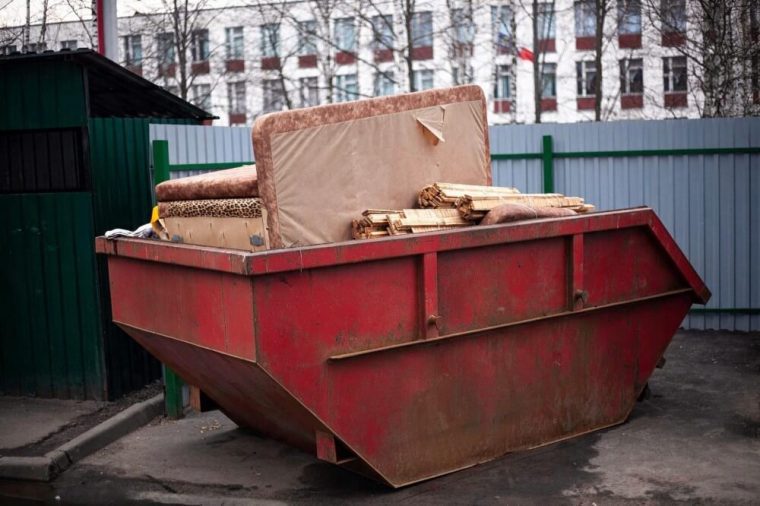
When embarking on a major spring clean, a commercial renovation, a bathroom strip-out, or a massive landscaping blitz, one of the most common questions people ask is: What size container do I actually need? Ordering a unit that is too small leaves you stranded with leftover trash and forces you to scramble for a secondary disposal solution. Conversely, booking a massive receptacle for a minor garage tidy means you are essentially paying for empty air.
Visualising cubic metres can be notoriously tricky if you do not work in waste management every day. Understanding how different capacities translate to everyday household and trade waste ensures you make the right choice the first time around, saving you both frustration and unnecessary expense.
Understanding Cubic Metres: The Standard Metric
In the waste management industry, capacity is measured in cubic metres. To put that into perspective, one cubic metre is roughly equivalent to a space measuring one metre wide, one metre high, and one metre deep.
However, measuring physical space is only half the battle. You also have to contend with the “air pocket factor”—the empty space created when irregularly shaped items like chair legs, tree branches, and bicycle frames are stacked haphazardly together. Knowing how various container tiers accommodate real-world debris makes planning your cleanup straightforward.
Breaking Down the Size Tiers
1. Mini Containers (2 to 3 Cubic Metres)
- Approximate Capacity: Equal to roughly 8 to 12 standard household wheelie bins or two standard box trailer loads.
- Best Suited For: Small weekend garage cleanouts, clearing out a single bedroom or home office, or minor green waste pruning from a modest courtyard garden.
- Real-World Example: If you are tossing out an old mattress, a couple of broken bedside tables, a few cardboard moving boxes, and some miscellaneous clutter, a mini container provides more than enough room without taking up your entire driveway.
2. Medium Containers (4 to 6 Cubic Metres)
- Approximate Capacity: Equivalent to about 16 to 24 wheelie bins or four standard trailer loads.
- Best Suited For: Medium household clearouts, significant bathroom renovations, comprehensive kitchen strip-outs, or substantial landscaping cleanups.
- Real-World Example: This is the most popular tier for everyday homeowners. If you are tearing out old kitchen cabinetry, ripping up worn carpet from three rooms, and disposing of an old lounge suite, a medium-sized unit accommodates the whole lot comfortably.
3. Large Containers (8 to 12+ Cubic Metres)
- Approximate Capacity: Ranging from 30 up to 50+ wheelie bins, or multiple large commercial trailer loads.
- Best Suited For: Major commercial fit-outs, extensive home renovations, de-cluttering entire multi-room estates, or heavy builder’s waste from large construction projects.
- Real-World Example: When you are gutting an entire house down to the studs, replacing a massive roof, or managing commercial office strip-outs, opting for a large rubbish skip hire service is essential to handle the sheer volume of drywall, timber framing, and discarded fixtures.
The Density Trap: Weight Limits vs. Volume Limits
One critical factor that catches many people out is the difference between how much space a pile of rubbish takes up and how much it actually weighs. While a large container can hold an enormous volume of light, fluffy waste like attic insulation, cardboard boxes, or dry garden clippings, filling that exact same container to the brim with dense materials like wet soil, concrete, bricks, or roof tiles will instantly breach legal transport weight limits.
Transport trucks are bound by strict road safety laws regarding maximum axle weights. If you are tackling a heavy demolition project involving masonry, earth, or tiles, you generally need specialised heavy-duty bins designed specifically for heavy loads, and you will usually be restricted to smaller physical sizes to ensure the truck can legally lift and haul the payload.
Tips for Maximising Your Container Capacity
If you want to squeeze every last litre of value out of your chosen unit, adopt a strategic loading approach:
- Disassemble Furniture: Never throw a bulky wardrobe or dining table in whole. Take legs off, unscrew panels, and break items down so they lie flat against the base.
- Tuck Small Items into Cavities: Use empty spaces inside old washing machines, hollow boxes, or drawers to store smaller bags of rubbish.
- Load Systematically: Start by placing flat, heavy items on the bottom to create a stable, solid floor. Build upwards systematically rather than just tossing items in at random angles.
By accurately assessing your project’s scope, understanding the physical dimensions of available units, and loading your debris with care, you can handle any cleanup efficiently and keep your project running smoothly from start to finish.
